
Our website uses cookies to enhance your browsing experience.


While the industry debates memory safety, the ISO committee and developers continue shaping the future of a much-loved language, we've gathered the most exciting recent events from the C++ world, along with some useful resources.
The ISO Committee has finished the technical work on C++26. During a series of meetings, the committee refined the upcoming standard's feature set, exceeding many expectations. Key additions include:
std::execution, a universal framework for asynchronous execution, concurrency, and parallelism;pre, post, and contract_assert contracts, which enable developers to define preconditions, postconditions, and assertions directly in function declarations;#embed for binary data, better metaprogramming capabilities, and many other important updates.Both GCC and Clang compilers have already implemented most C++26 features during the standardization process, and they'll soon appear in other compilers as well.
Efforts to improve security in the upcoming C++29 continue. Bjarne Stroustrup is actively promoting the concept of C++ Profiles. They're sets of additional rules that developers can apply in their code to ensure security.
Profiles help prevent common issues, such as null pointer dereferences or buffer overflows. They also provide a unified foundation for improving safety without sacrificing the core strengths of C++.
This spring brought a new release of LLVM 22.1. This update brings a wide range of changes: supporting different architectures and adding advanced memory management tools. Key highlights include:
You can find the full list of updates on the official website.
Rust vs C++: Competition or Evolution in Systems Programming for 2026
C and C++ form the foundation of modern software. Operating systems, databases, game engines, and compilers—they all trace their origins back to these languages. Their speed, power, and reliability made them the choice of many. Today, developers have another choice: Rust. This language incorporates the strengths of C++ and addresses some of its issues like memory safety and undefined behavior. So, what's the best option for a developer? The article author explains in detail cases where Rust or C++ has benefits and also describes the pros and cons of these languages.
How far does lookup see in C++?
Placing functions near the types they're intended for is a good practice in C++. However, to properly apply this approach , one should understand how the name lookup mechanisms work as well as where to place functions without violating the language rules. The article author covers the concept of name lookup and explores an argument-dependent lookup (ADL) in particular.
Silent foe or quiet ally: Brief guide to alignment in C++
Have you ever wondered how data is stored in computer memory? Each variable occupies space in memory as a sequence of bytes at a specific address. However, access to this data is winding: data first gets into the fast cache, which exchanges data blocks with RAM.
In this series of articles, the author carefully explains the data alignment mechanism. The second part is here. And here's the third one.
Let's check vibe code that acts like optimized C++ one but is actually a mess
Vibe coding is a hot topic these days. In the article, the author uses a small project called Markus as an example to explain why it's important to understand AI-generated code and be able to see what lies beneath a program's elegant syntax. What do you think of vibe coding? Let us know in the comments!
To stay up to date on the latest C++ news, follow us on X and LinkedIn. We post articles by our company's experts, video reviews featuring the latest analyzer updates, event announcements, memes, and much more. Most importantly, you're always welcome to leave comments—we'll be happy to respond!
In this talk, Bjarne Stroustrup, creator of C++ and former Bell Labs researcher, reflects on the origins of C++, tracing its evolution from Simula to a system built on C. He discusses the C++ standards committee, memory safety, AI writing code, zero-overhead abstraction, and what he wishes he'd fought harder for from the start.
Lightning Talk: Learning C++ Through Writing Coding Questions — CppCon 2025
CppCon has shared talks from the last event. In this talk, the speaker explains why creating custom exercises for employee training is one of the best ways to master the knowledge of the modern C++ standards. He also discusses how to go from understanding a language feature to explaining it with code example and implementing it in a project.
Lightning Talk: A C++20 Modules Performance Field Report — Tyler Drake — CppCon 2025
At CppCon 2025, Tyler Drake shared an interesting field report. He wrapped "header-heavy" third-party libraries into custom C++20 modules. The result: full build time on his laptop dropped by 41.5%, and incremental builds were cut in half—down to just 1 second. A compelling argument for anyone still hesitant to adopt modules due to legacy dependencies.
Jason Turner, Mathieu Ropert, and Chris Bieneman talk about the history of GPU shading languages from DirectX assembly in the early 2000s through today, why HLSL is gradually becoming more C++-like (templates, structs, auto), and where it deliberately draws the line. They discuss current industry trends around AI-generated code, and the difficulties of maintaining floating-point consistency across platforms.
P.S. When choosing content for the digest, we noticed that they also mentioned our article on analyzing vibe-coded projects. Thank you for your kind words about PVS-Studio, it means a lot to us to hear such positive feedback from you.
Sea of Thieves — Keeping Games Up to Standard — Keith Stockdale — CppCast 406 / C++Weekly 529
Here's another episode of CppCast with Jason Turner and Mathieu Ropert. Keith Stockdale, senior software engineer at Rare, brings up the topic about challenges of maintaining large, long-term C++ codebases in game dev. The talk covers modern C++ standards, the effect of compiler-specific code on portability, and the practical realities of upgrading systems such as Unreal Engine in professional studio environments.
Measure Twice, Optimize Once — Two's Complement Podcast
In this podcast episode, Ben Rady and Matt Godbolt talk about performance optimization: benchmarks and microbenchmarks, real performance problems in software systems. They also discuss how to measure performance before optimization and how to understand profiling noise.
Episode 286: GPU Profiling with NVIDIA Nsight Compute (NCU) — ADSP: The Podcast
The talk focuses on GPU optimization techniques, profiling tools, and high-performance algorithm design. Marco Salgado explains how GPU workloads often become limited by memory throughput. The speakers examine profiling with NVIDIA Nsight Compute, GPU rotate algorithms, and the role of libraries such as NVComp for GPU-based compression. They also discuss how high-level libraries and languages can outperform hand-written low-level implementations by automatically applying optimizations.
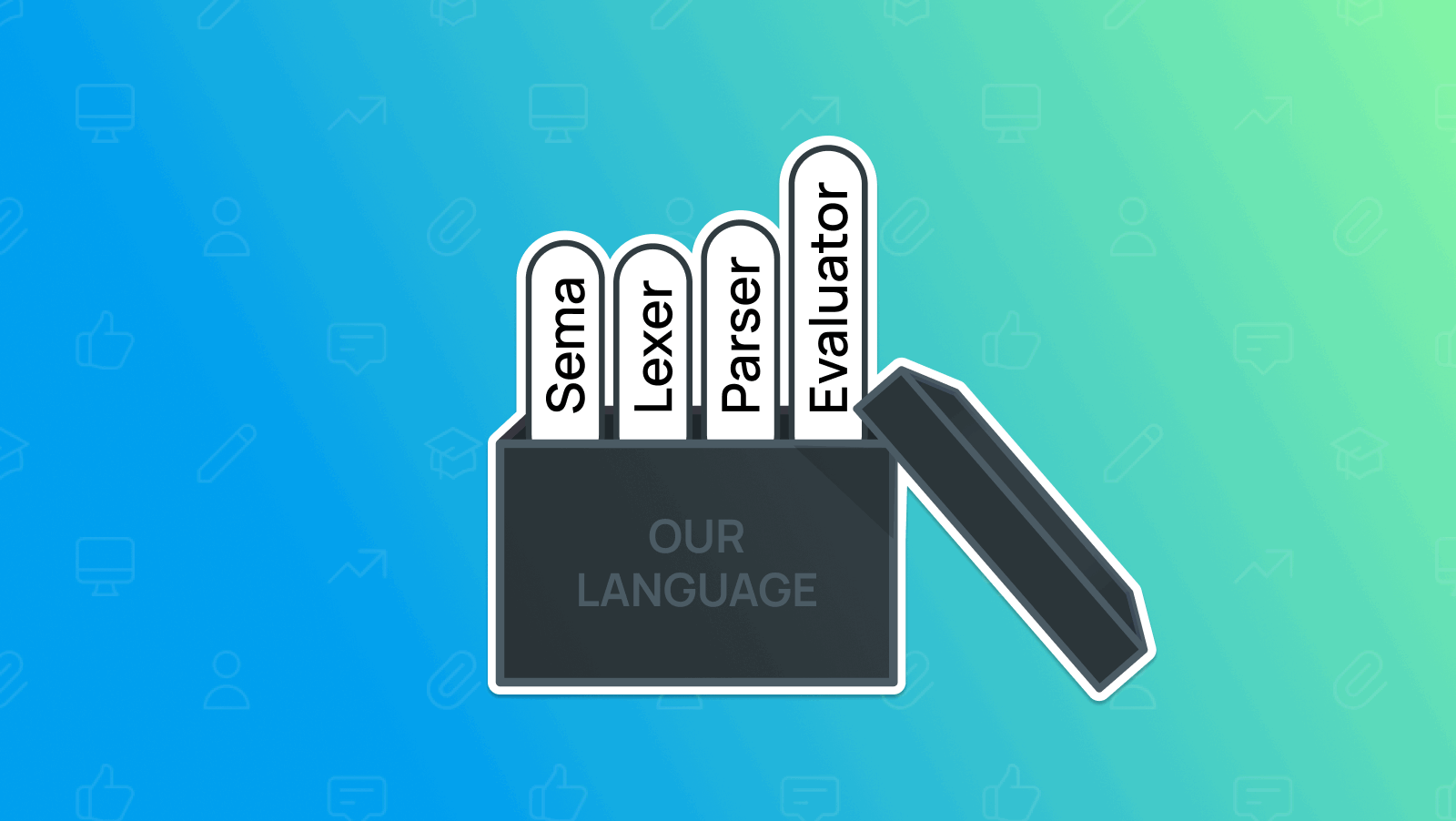
C++ is constantly evolving and growing: new useful features appear, making it easier to use, but new challenges also arise. If you want to better understand how any language works, it's worth trying to create your own.
We invite you to watch a series of talks where we create a custom programming language in a live-coding format. Yuri Minaev, experienced C++ developer and architect at PVS-Studio, will guide you through the journey of mastering C++: from implementing a lexer and a recursive descent method to creating your own evaluator. Less boring theory and more actual coding is a great way to boost your programming skills.
Want to learn how to create your own programming language? Follow the link and join new webinars!
Thank you for reading our digest! Share with us any other fresh news or events you found noteworthy. You can submit them using our feedback form.
Don't forget, PVS-Studio stands guard over your codebase. Get the 30-day trial promo code here!


0
0
0


0